| Brief Description |
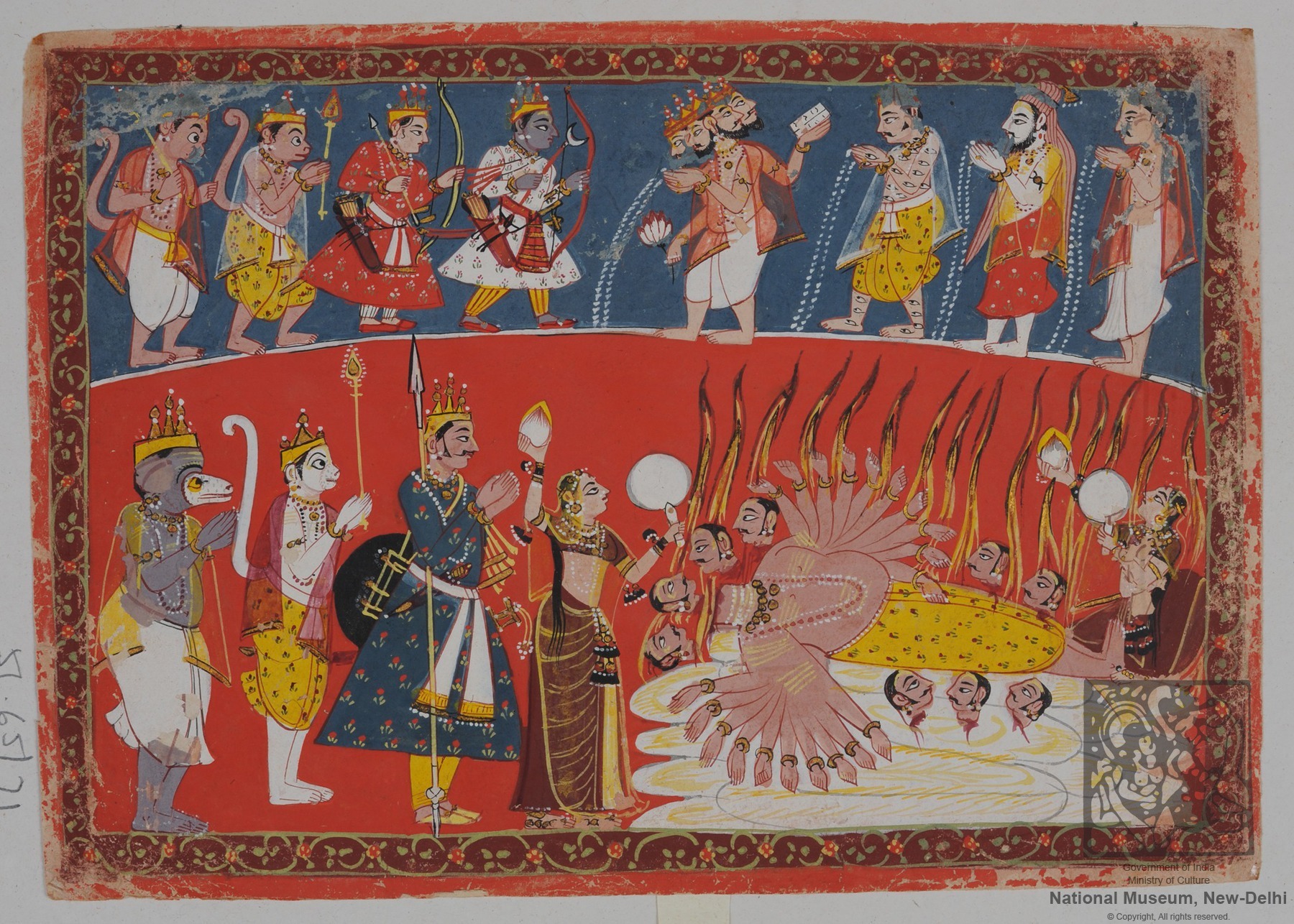
Seeing his brother lying dead after being defeated in the battle, Vibhishana lamented. He then describes the great qualities of Ravana. Rama instructs Vibhishana to perform the last rites of his deceased brother. The consorts of Ravana lament at his death, recollecting his valour. They were surprised that how could the mighty demon be killed by an ordinary mortal. Mandodari, the wife of Ravana, is stunned by the death of her mighty husband, recalls his strength and power and says that none other than Vishnu could have killed him. The gods - Brahma, Shiva, Narad, Sanka and other sages paid homage to Sri Hari or Rama. Placing the body of Ravana on a consecrated spot they piled up a sacred pyre with logs of sandalwood. In accordance to the scriptures, Vibhishana then performed the funeral rites of Ravana.
The painting is divided into two horizontal divisions by two colours. The lower register in red depicts Ravana's body laid over funeral pyre, and the upper register in blue, depicts the gods paying homage to Rama. The register above shows the gods identified here as four headed Brahma, behind whom stand Indra, then Shiva with his matted locks and then possibly Sanka paying homage with flowers to Rama after he has defeated Ravana.
The bright red background, a colour preferred by the Malwa artists illustrates the scene when Ravana's severed heads are placed along his body on logs of wood being cremated. One of his wives is seated with him on his funeral pyre committing sati. This is not mentioned in the Ramayana therefore possibly reflects the prevalent custom of the time. A woman, perhaps Mandodari, is singing his praises as is mentioned in Valmiki's Ramayana.
Rama had explained to Vibhishana that all hostilities end with the death and therefore it was his duty as his younger brother to perform his funeral rites. Vibhishana, Sugriva and Jamvan stand paying their last tributes to the great demon king. A stylized darker maroon border frames the painting. |