Silver Coins of Shri Shri Raja Rajendra Narayan Bhupa Raja
Museum Name
National Museum, New Delhi
Object Type
Numismatics and Epigraphy
Main Material
Silver
Manufacturing Technique
[Machine Made]
Artist's Nationality
India
Country
India
Provenance
West Bengal
Origin Place
Cooch Behar
Find Place
West Bengal
Patron/Dynasty
Koch
Period / Year of Work
20th century
Inscription
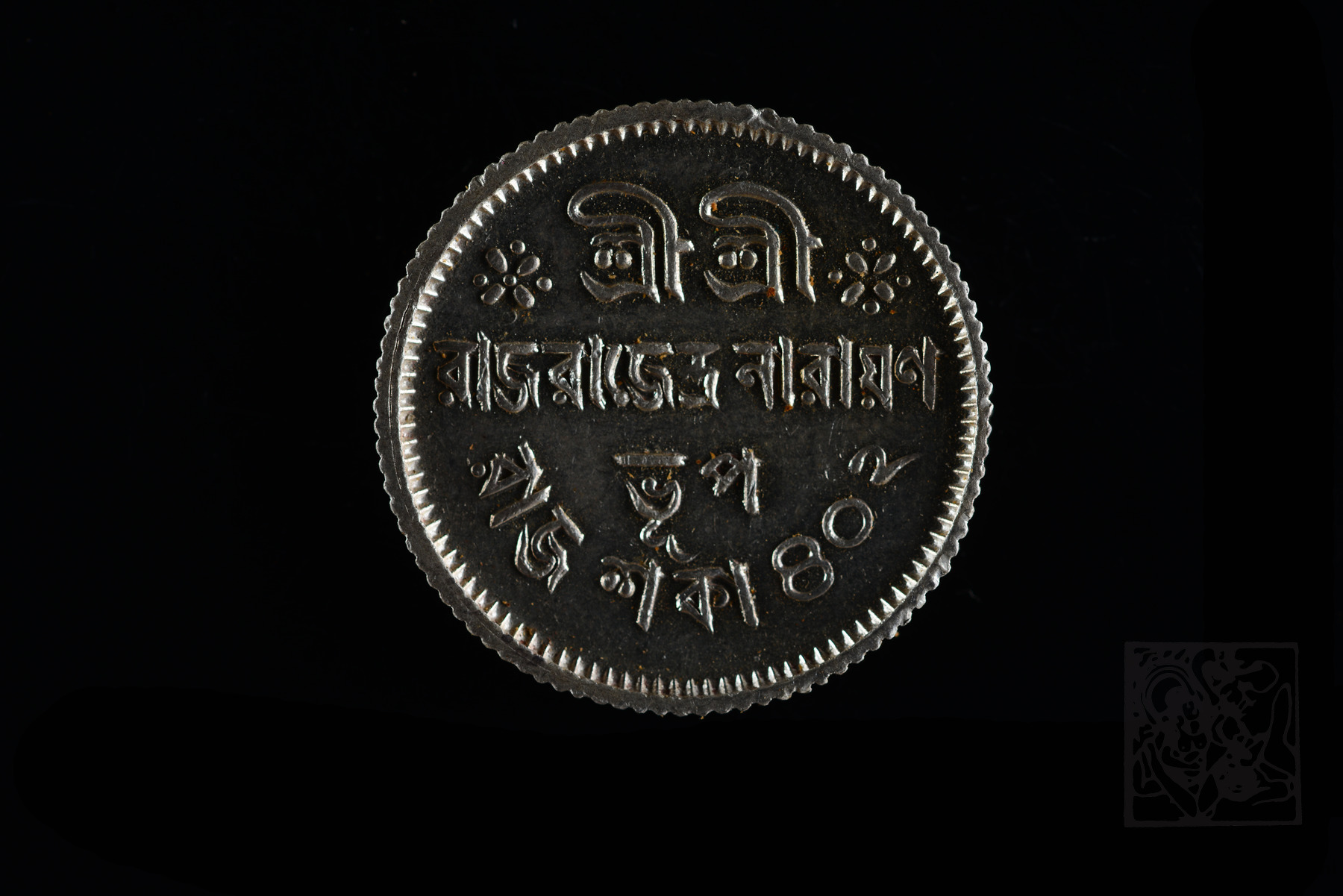
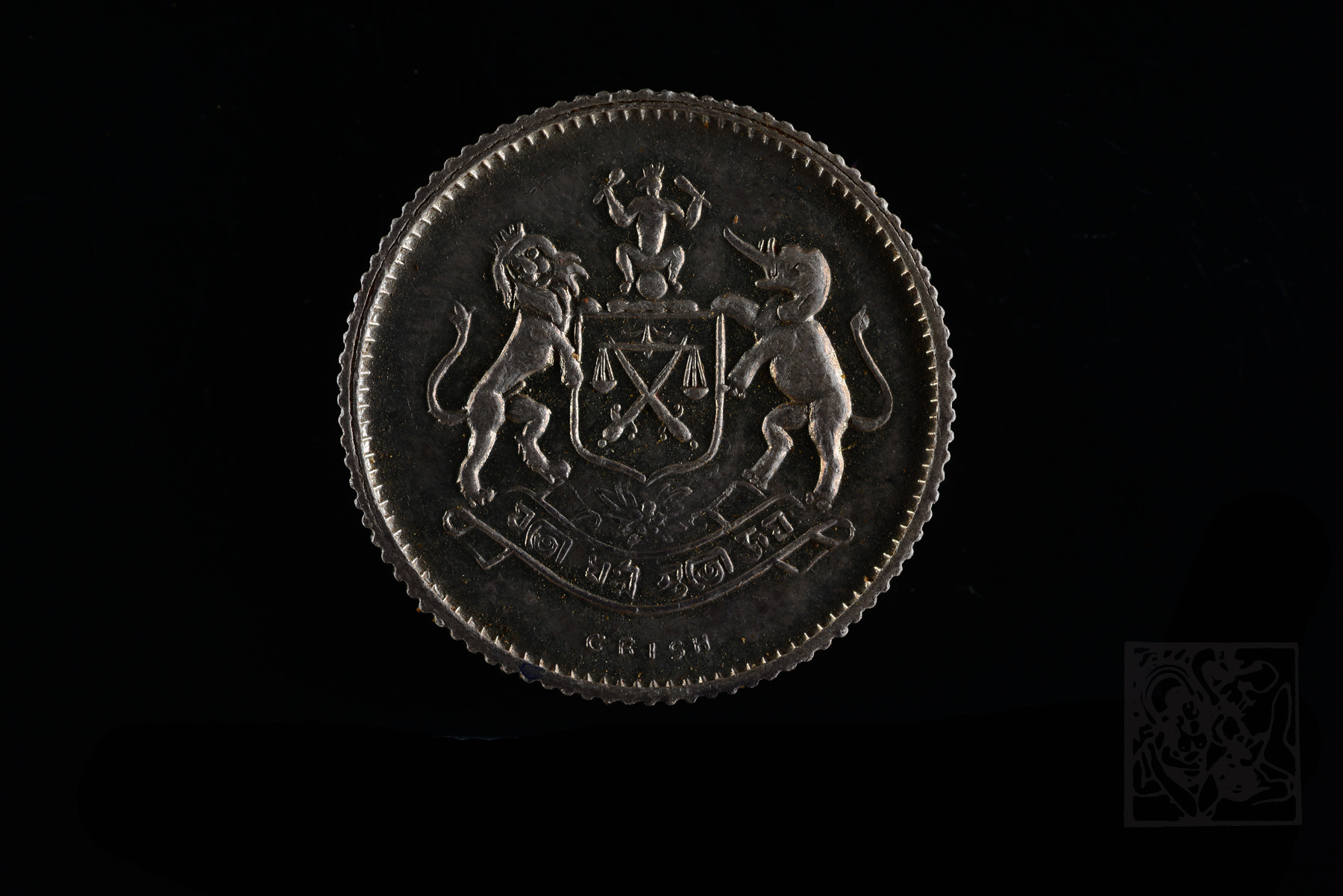
On the obverse there is a royal Coat of Arms and the royal motto in Sanskrit shloka "Yato Dharmo Stoto Jayah" in Bengali script and on the reverse, it is written "Shri Shri Rajendra Narayan Bhupa Raja" and has two flowers on either side of Shri Shri, Raja Saka 402.
Culture
Cooch Behar
Mint
Cooch Behar
Weight
5.2:gram
Dimensions
2.1 Centimeter
Brief Description
Coin of Rajendra Narayan Bhupa Raja (Maharaja of Cooch Behar state between 1882 CE to 1913 CE. The currency of the Koch kings was named Narayani after the royal surname Narayan of the dynasty. The main currency in circulation was the British currency after 1866 and not the Narayani coins (currency of the Cooch Behar).
The coat of arms on the obverse of the Cooch Behar coins show a crowned lion on the left and an elephant on the right and the royal crest having Hanuman on top. The coat of arms has the royal motto in Sanskrit shloka “Yato Dharmo Stoto Jayah” in Bengali script. The shield has no patterns and has two swords in crossed position and a balance.
The reverse has the name of the king and the date as Raja Saka (Cooch Behar Era) 402 which coincides with 1911 CE. The name of the king has the epithet of Shri Shri whose importance is enhanced with the presence of two flower motifs on either side.
Detailed Description
Coin of Raja Rajendra Narayan Bhupa Raja who was the Maharaja of Cooch Behar state between 1882 CE to 1913 CE. The currency of the Koch kings was named Narayani after the royal surname Narayan of the dynasty. In 1773 CE Cooch Behar entered into a treaty with the British East India Company and became a friendly state. But its currency was in use until 1845 when the British Indian government commanded the British agent residing at Cooch Behar to shut down the mint.
The main currency in circulation were the British currency after 1866 and not the Narayani coins (currency of the Cooch Behar). The princely state of Cooch Behar minted coins only on the ceremony of coronation of a ruler after 1866 when the British government made it mandatory by law to use its own issued currency. The coat of arms on the obverse of the Cooch Behar coins show a crowned lion on the left and an elephant on the right and the royal crest has Hanuman on top.
The shield is patterned and the coat of arms has two swords crossed with each other and a balance with the royal motto in Sanskrit shloka "Yato Dharmo Stoto Jayah" in Bengali script. The reverse has the name of the king and the date as Raja Saka (Cooch Behar Era) 402 which coincides with 1911 CE. The name of the king has the epithet of Shri Shri whose importance is enhanced with the presence of two flower motifs on either side of Shri Shri.