| Brief Description |
The practice of printmaking as a fine art medium gained immense
popularity with the establishment of Kala Bhavan founded by
Rabindranath Tagore in 1919, wherein new styles of printmaking
were explored through an organization called the 'Bichitra Club'.
A prominent member of this club was artist Mukul Chandra Dey, who
was the first Indian artist to go abroad in the 1920's to learn
graphic art.
Indian painter-engraver Mukul Chandra Dey, was an important
personality of his time. A student of Santiniketan School during
the early years of the 20th century, he left his mark as a
pioneer of dry point-etching in India. Having interacted closely
with such Japanese masters as Yokoyama Taikan, Shimomura Kanzan,
his skill with lines, and familiarity and exposure with Eastern
printmaking traditions such as the Ukiyo-e prints, widened.
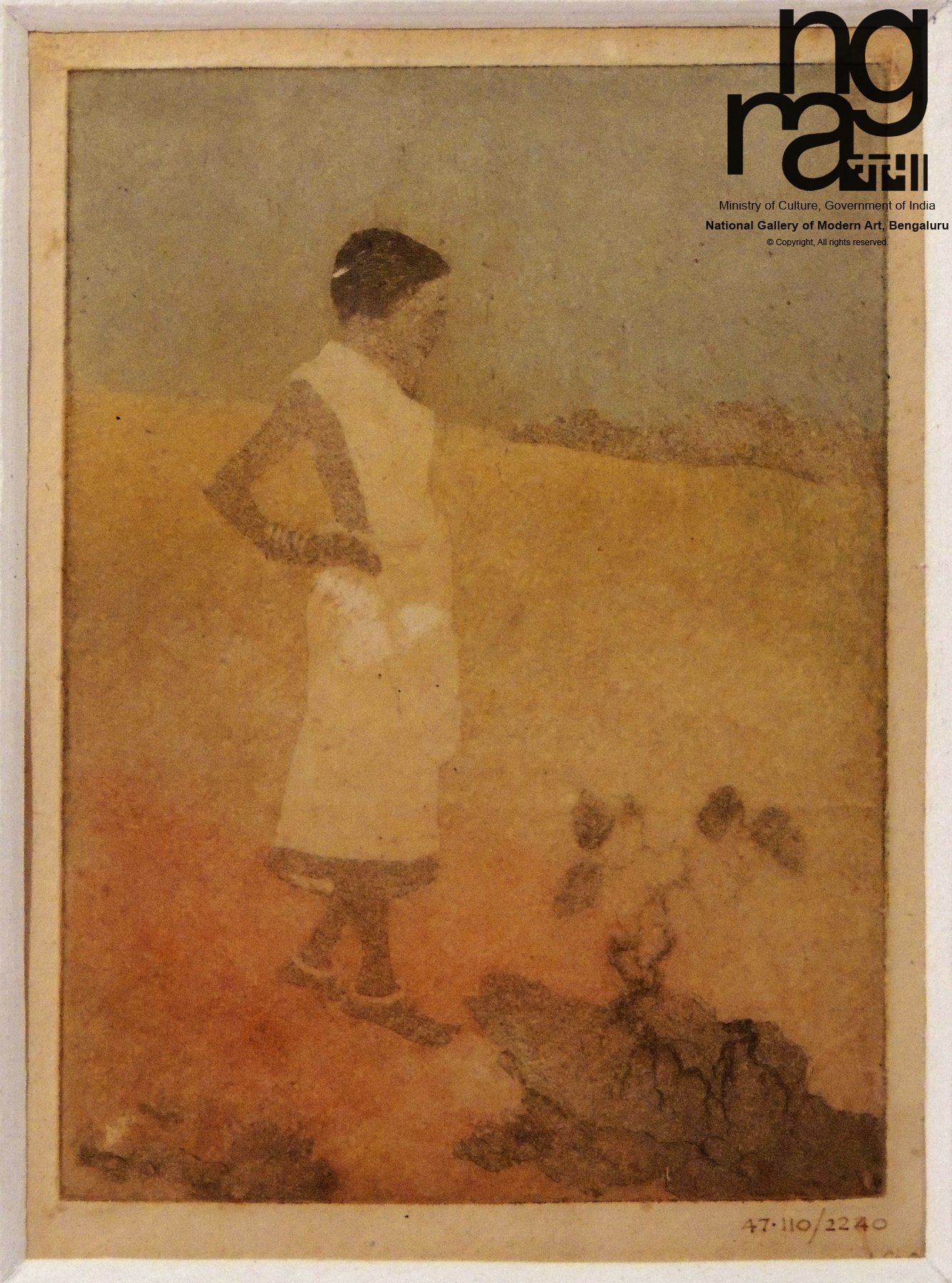
Dey used the copper plate, and print surfaces like a sketch book,
which he would re work at a later stage and make prints of. Some
of the thematics that recur in his work are rural landscapes,
mythical narratives, festivals, and the indigenous people of
Bengals; the Santhals. His prints of people often capture the
graceful movement of limbs, and have been referred to as rather
idyllic and romantic. His landscapes though are exquisitely
portrayed spaces, always maintaining an ambivalence between man
and nature, real and mythical.
|