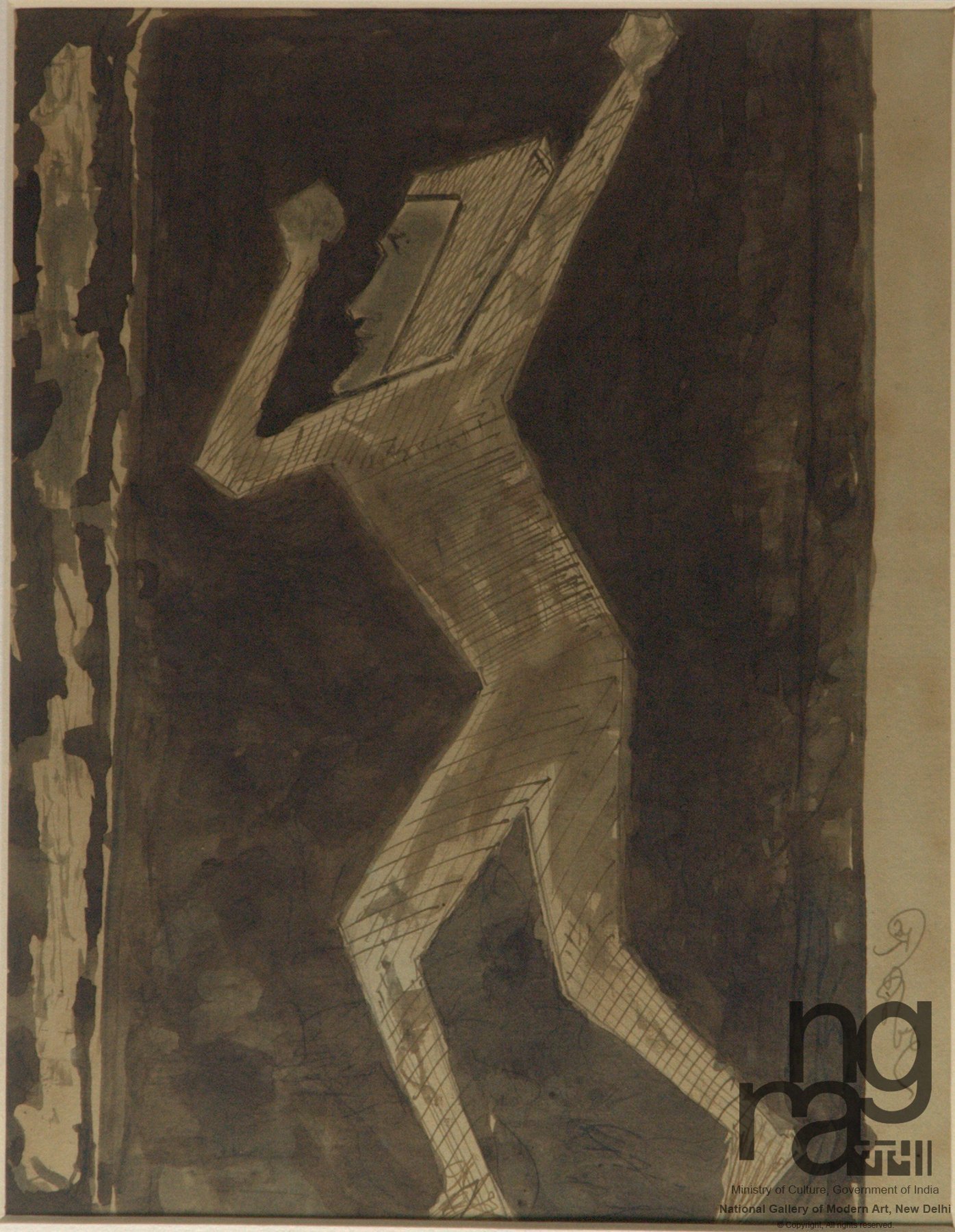
Rabindranath Tagore was primarily known as a writer, poet, playwright, philosopher and aesthetician, founder of a unique educational institution, Visva- Bharati, music composer and choreographer. Tagore's emergence as a painter began in 1928 when he was 67 years old. Beginning with scratchings and erasures on the pages of his manuscripts during the mid-20s of the 20th Century, he slowly moved towards drawing and painting independent images. Between 1928 and 1940, Rabindranath painted more than 2000 images. He never gave any title to his paintings.
Fed by memories and the subconscious, Rabindranath's art was spontaneous and dramatic. His images did not represent the phenomenal world but an interior reality. Rabindranath veered towards abstraction in his figuration. Expressionism in European art and the primitive art of ancient cultures inspired him. Fantasy, wild imagination and an innate feel for the absurd gave a distinctive character to his visual language. The National Gallery of Modern Art has a representative collection of his imagery.
Country
India
Inscription
Signed 'Sri Rabindra' in Bengali vertically at the bottom right
corner of the painting in pencil.
Dimensions
20 X 26 cms
Detailed Description
Art historian R. Siva Kumar dates this work to c. 1930-31 and descriptively titles it Figure with Raised Arms. Such geometric figuration could be seen in the early stages of his painting.
``
Rabindranath had a passionate interest in theatre which is reflected in the dramatic gestures seen in many of his paintings.