| Artist's Life Date / Bio Data |
Satish Gujral (b-1926) studied art initially at the Mayo School of Arts, Lahore (1939-44). He left in 1944 to join Sir J. J. School of Art, Mumbai, where he studied till 1947. In the upheaval of partition he returned to his home town Jhelum (Pakistan) from where eventually he migrated to Delhi. From 1952 to 1954, he was in Mexico at The Palacio Nationale de Bellas Artes to pursue his art studies. He has held many one-man shows in India and abroad and executed prestigious mural projects in India and other countries. He has won several honours and awards and his works feature in major national and International collections.
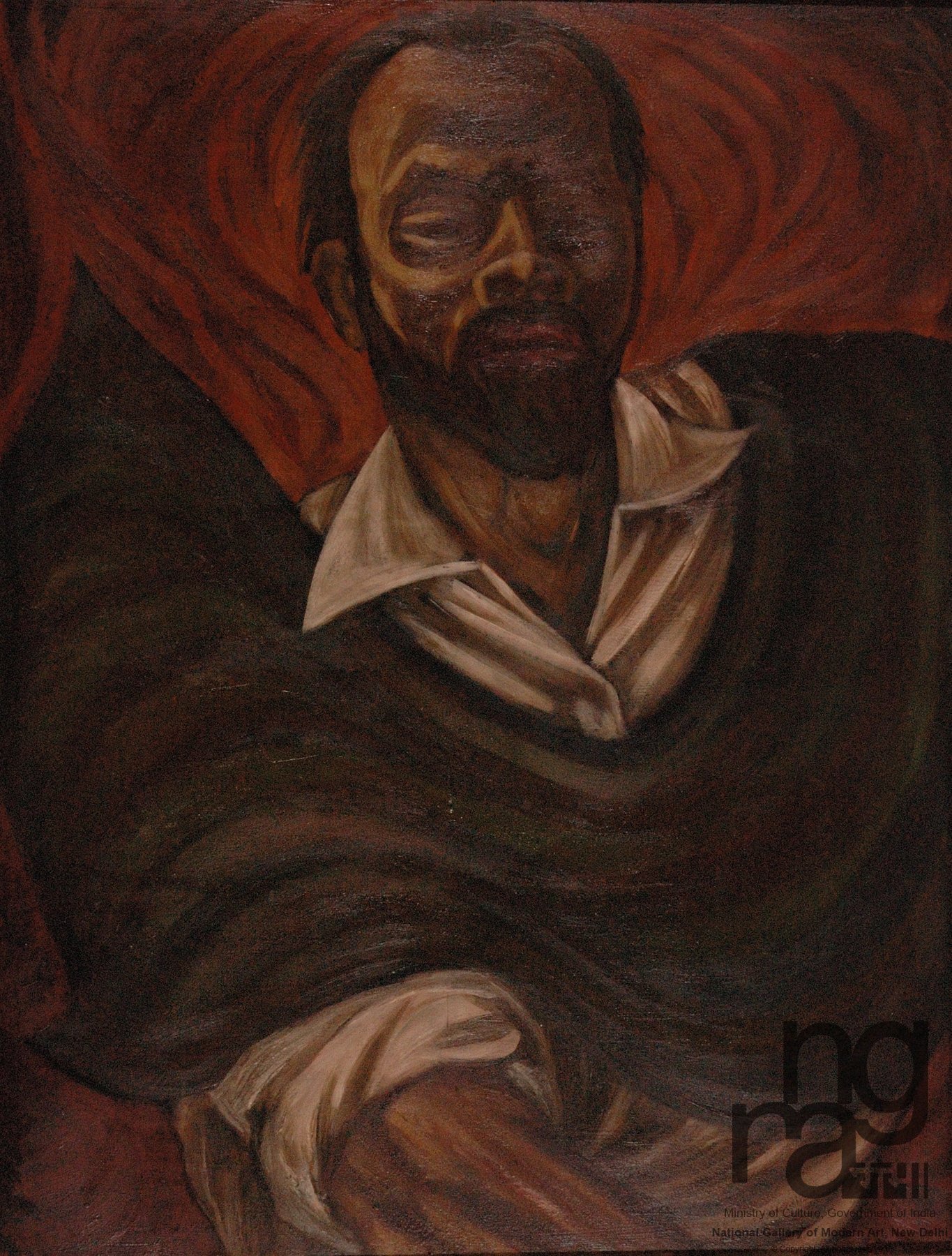
Viewing Gujral's journey over five decades, one clearly discovers a binding thread, consistent, enveloping, involving and growing from his early obsessive and expressionistic figurative works to his architectural designs and architectonic creations in multiple media, truly establishing him as one of this country's formidable and original 'conceptual thinkers'. One can distinctly realize that the artist has incorporated several diverse materials and sensibilities in this artistic quest. As a painter, sculptor, muralist, architect and interior designer, it is evidently visible that the evolution and its process is as much important to him as the end result'.
His stay in Mexico (1952-1954) provided his work a new dimension with exposure to well-known masters like David Alfaro Siqueros, under whom he studied and Diego Rivera along with many others who openly appreciated his works calling it ''A Frank breath of greatness''. His personal association with artists like Frida Kahlo during the last few months of her life also provided Satish a great emotional and intellectual bondage. His works have traversed along a course exploiting different crafts, techniques and materials to the introduction of folk elements. His burnt wood creations during the 70's and 80's speak of an anthropomorphic quality with similarity in content and form with the totemic poles. His murals reveal a thorough understanding of the diverse material that he was already familiar with and exhibit his great versatility in terms of concepts, medium, material and execution. His architectural creation, the Belgian Embassy in New Delhi, built in an international style utilizing local material and craftsmanship, can truly be considered a landmark in contemporary Indian Architecture. Eminent thinkers like John Berger have written thought provokingly about the penetrative and moving quality of the artist's works. |