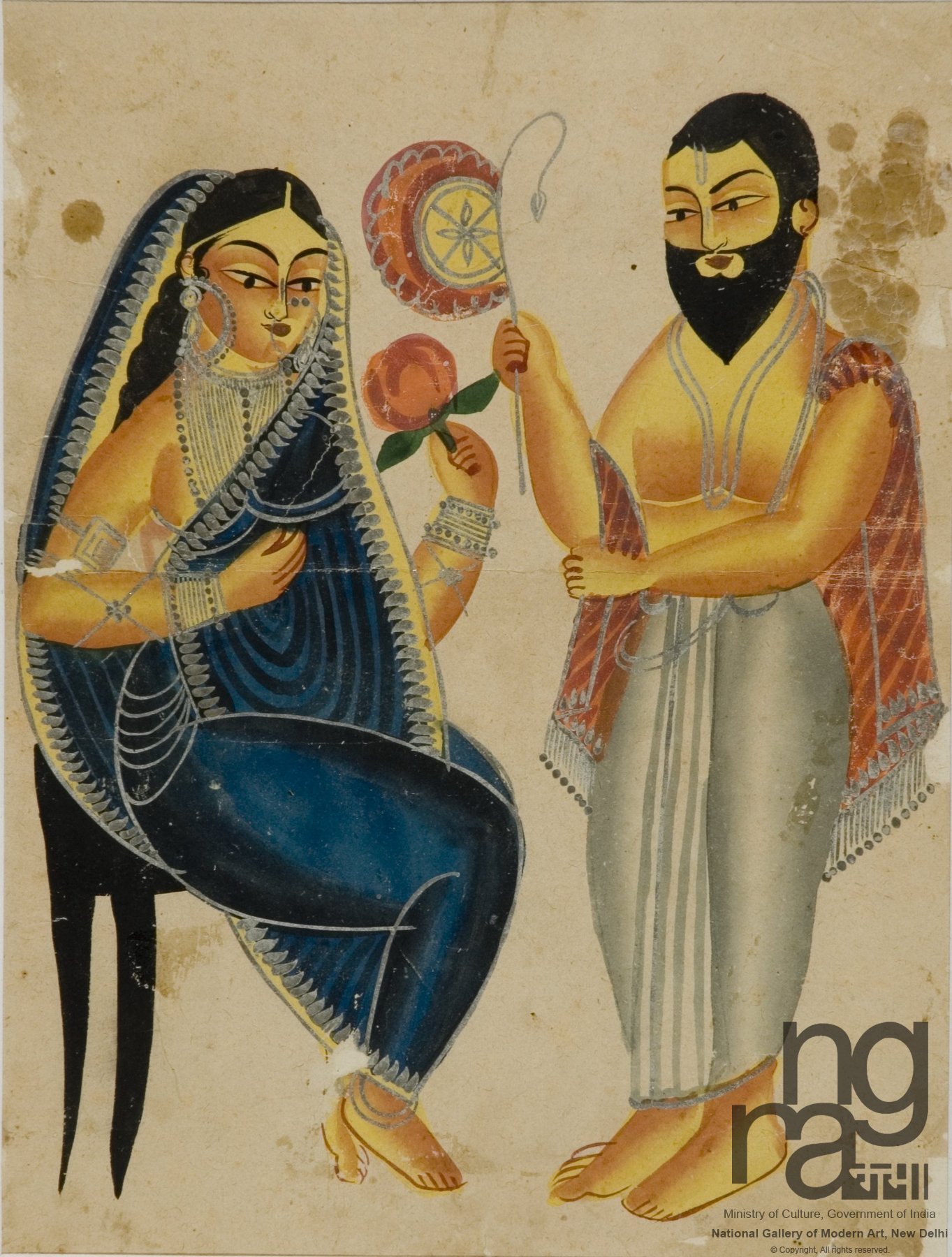
In front of you is an archetypal 19th century Kalighat painting. It is titled ‘Priest with Elokeshi’. Kalighat paintings emerged from the tradition of patachitra. Patachitras were drawings on cloth scrolls used by travelling storytellers in rural Bengal. Each section of the cloth was called a pat which gave their creators the name patua. According to art historians, patuas were not exactly a separate community and often included potters, stoneworkers and carpenters.
In the 19th century, Bengal saw migration from rural areas to the up and coming urban centre of Calcutta. Among the migrants were artisans such as the patuas. Many of these patuas settled themselves around the popular pilgrim destination of the temple of Kalighat. Thematically, the paintings were divided into Oriental and Occidental. The former depicted gods, goddesses, mythological characters as well as scenes from religious Hindu texts. The Occidental variety featured secular and civil themes.
These could be satirical such as those depicting the Bengali babu, or celebrate the heroism of Rani Lakshmi Bai and Tipu Sultan. Some, such as ‘Priest with Elokeshi’, depicted contemporary developments. Elokeshi was raped by the head priest of a temple and killed by her husband. Young Elokeshi’s plight echoes across time through the Kalighat paintings. |