
Surendranath Bannerjee
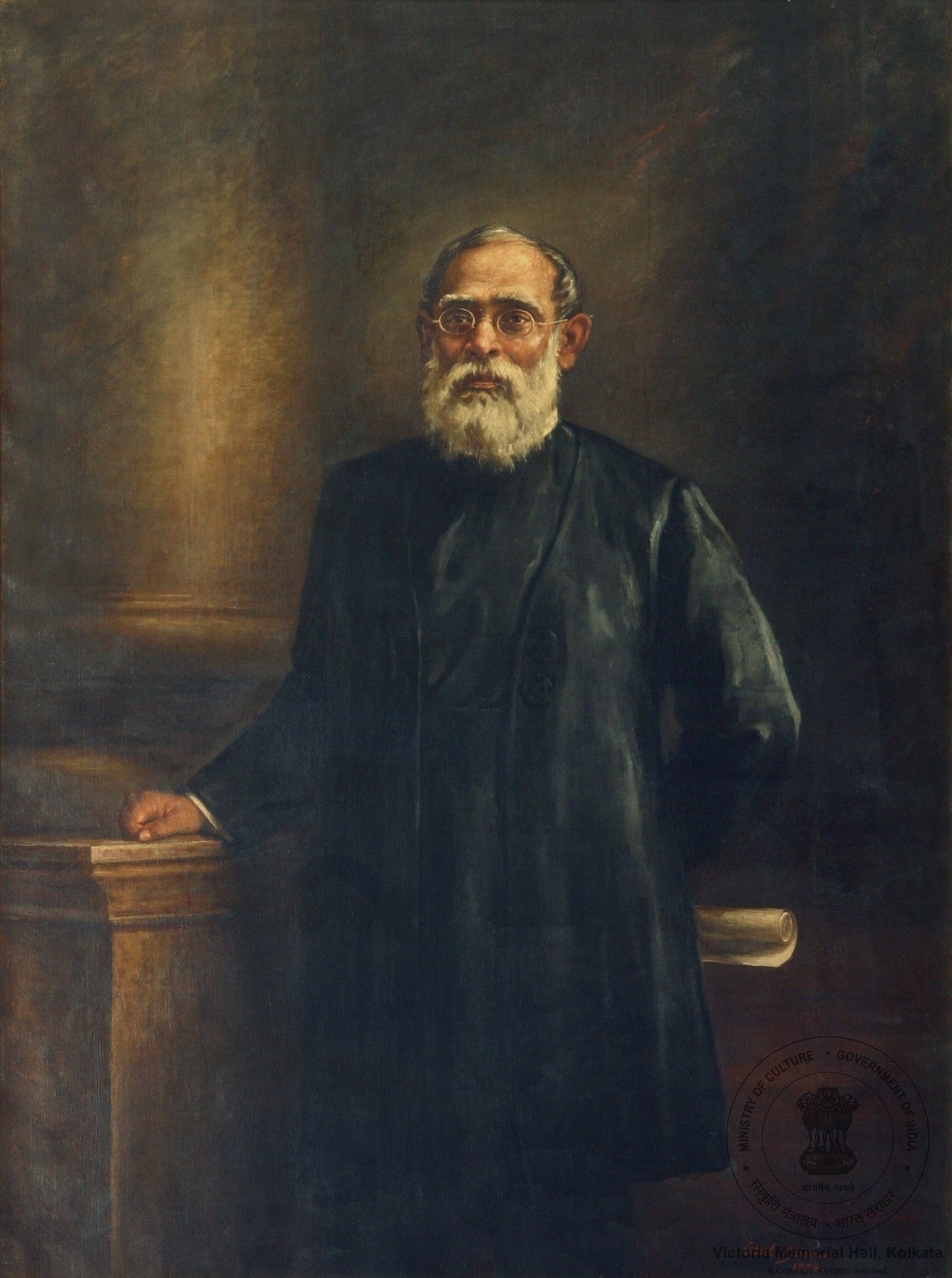
| Title | Surendranath Bannerjee |
|---|---|
| Accession Number | R3014 |
| Museum Name | Victoria Memorial Hall, Kolkata |
| Gallery Name | NA |
| Object Type | Painting |
| Medium | Oil on Canvas |
| Main Artist | Atul Bose |
| Artist's Nationality | Indian |
| Artist's Life Date / Bio Data | (1898-1977) Atul Bose was a portrait painter from Bengal, studied at the Jubilee Academy in Calcutta and then at the Government art school.His Bengal Tiger, a sketch of Asutosh Mukherjee, earned him a scholarship to the Royal Academy in London. Bose spent two years, 1924-6, at the Royal Academy. He was deeply influenced there by Walter Sickert. Upon his return to India, Bose taught at the Government art school in Calcutta. In 1929, the Government of India announced an all-India competition to produce copies of the royal portraits at Windsor Castle for the Viceroy's new residence in New Delhi. |
| Provenance | The Trustees of Victoria Memorial |
| Origin Place | Mymmensing, Dacca |
| Style | Academic European Style |
| Period / Year of Work | 1954 |
| Inscription | Signed lower right in English with date |
| Dimensions | 152.4 x 114.2 cm |
| Brief Description | Surendranath Bannerjee (1848-1925) was one of the earliest Indian political leaders during the British Raj, founded the Indian National Association in 1876 along with Ananda Mohan Bose. He passed the Indian Civil Service Examination along with R. C. Dutt and B. L. Gupta in 1868. He was removed from I. C. S. while serving as Assistant Magistrate at Sylhet on trivial grounds. He had joined the Metropolitan Institution, Calcutta as a teacher in English. In 1882 he established the Ripon school which became the Ripon college and he himself taught there. For many years he owned and edited the newspaper 'The Bengalee'. A powerful orator, he swayed public opinion in India for more than forty years. He started vigorous agitation in India against the lowering of the age for the I.C.S. from 21 to 19. He was associated with the Calcutta Municipality for many years and represented it in Bengal Legislative Council. He went to England to rouse public opinion there in favour of India. He was President of Indian National congress in 1895 and again in 1902. He took a leading part in the historic movement against the Partition of Bengal. For some years he was a member of the Viceroy's Legislative Council. His moderate opinions led him into conflict with the leaders of the Congress whereupon he organised the Moderate Conference, later renamed 'The National Liberal League'. He welcomed the Montagu-Chelmsford Reforms and became Minister for Health and Local Self-Government in Bengal. The Calcutta Municipal Act of 1923 which he sponsored as Minister was a distinct landmark in the history of Local Self-Government in India. |


