| Artist's Life Date / Bio Data |
(1911-2011) He was best known for his portrait paintings and representational art. Graduated from Sir J. J. School of Arts, has his paintings on the walls of the High Court, the Parliament and other prestigious arenas.
He has also done portraits of personalities like the mayor of Mumbai and G. D. Birla. |
| Brief Description |
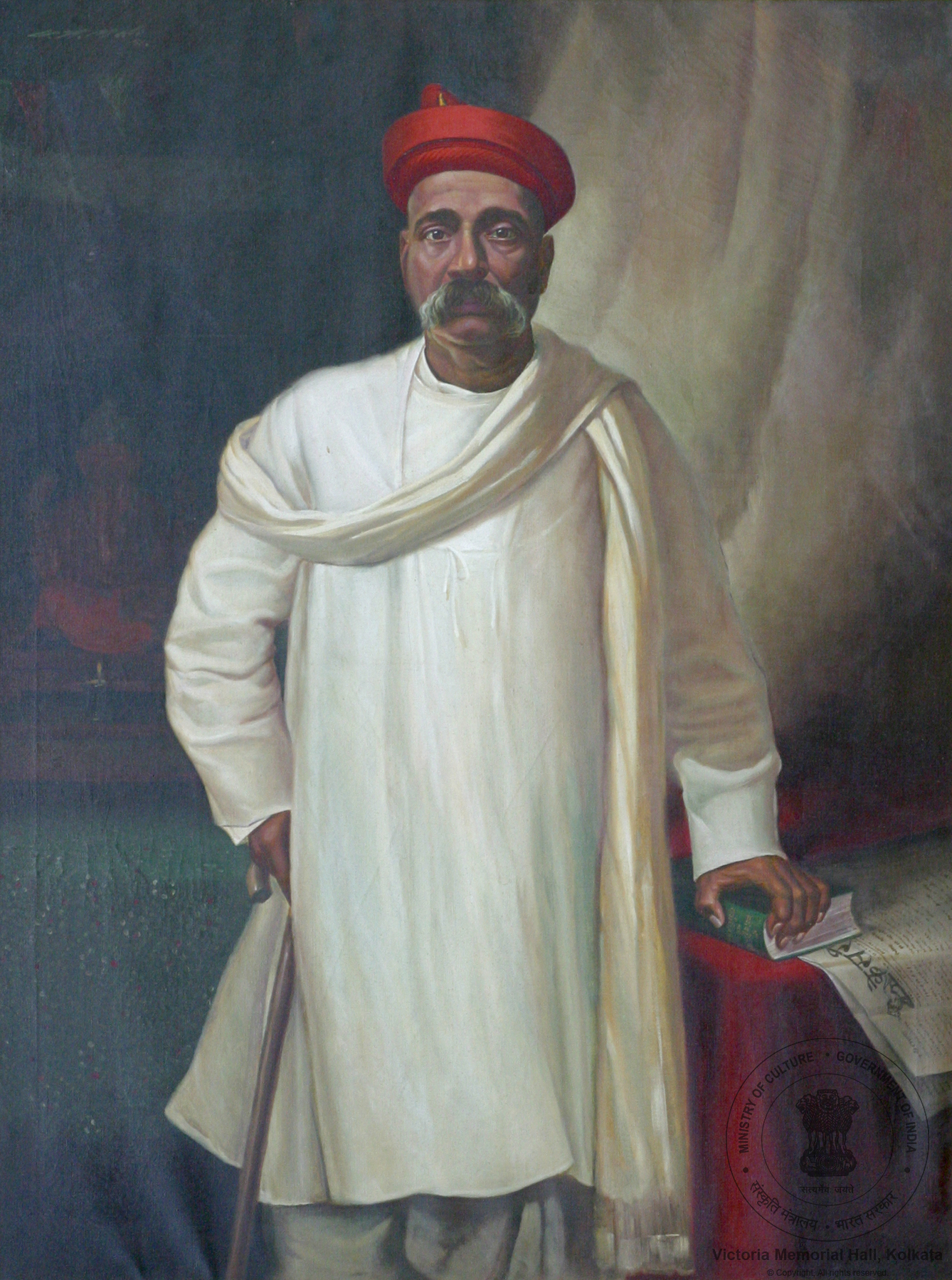
Bal Gangadhar Tilak (1856- 1920), born as Keshav Gangadhar Tilak, was an Indian nationalist, journalist, teacher, social reformer, lawyer and an independence activist. He was the first leader of the Indian Independence Movement. After graduating in law, he took up journalism and alone with his friends brought out two newspapers, Maratha and Kasari. In 1884 he established the Deccan Education Society. After teaching law for some time he gave it up in order to concentrate on the study of the Vedas. He contributed a paper embodying his researches in the Vedas to the International Congress of Orientalists in London in 1892.
His fame as a scholar was established as a result of the publication of his book- The Arctic Home in the Vedas. Scholastic studies did not, however, absorb him for long. A patriot and a nationalist to the core, Tilak made it the great object of his life to diffuse the spirit of nationalism among the masses. In 1897 he started the Shivaji festival. Soon after he was arrested on the charge of sedition, allegedly preached by him in his speech at the festival and articles in the Kesari and sentenced to rigorous imprisonment.
Later in 1907 he led the extremist group within the Congress against the moderates at the Surat session of the Congress. He was arrested in 1908 for his article in the Kesari on the Muzaffarpur Bomb tragedy and jailed for six years. While confined in Mandalay jail, he wrote a book on the Gita, a living monument to his erudition.
In 1916 he founded the Home Rule League, its object being 'to attain Home Rule or self-government within the British Empire by all costitutional means'. Tilak was much more than a politician ; more than any man of his generation he was the embodiment of India's re-awakened confidence, self-respect and political aspirations. He was given by common consent, the name of 'LOKAMANYA', or respected by the people. |