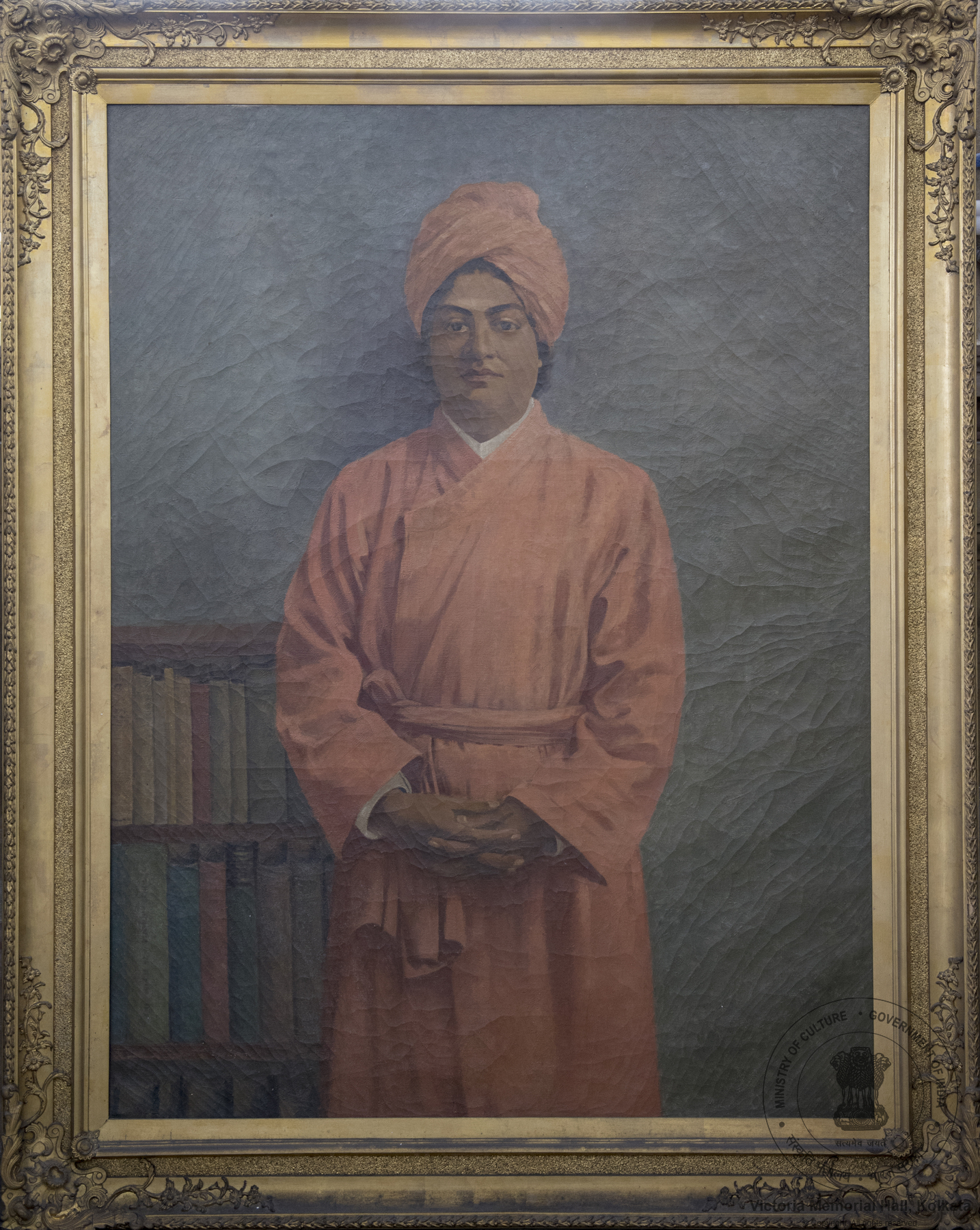
Swami Vivekananda (1863-1902) From his boyhood Narendranath Dutt, as he was known in his lay life, showed great powers of intellect, strong sympathy for the down-trodden and a spiritual bent of mind. He studied Western philosophy and associated himself with the teachers of Brahmoism, but his spiritual yearnings were not satisfied until he met Ramakrishna Paramhansa and became his devoted disciple. After Ramkrishna's death he spent six years as a hermit in the Himalayas.
He then travelled in different parts of India and in 1892 came to Madras. In 1893 he went to the U.S.A. and addressed the Parliament of Religious at Chicago. His clear exposition of the Hindu religion backed by his powerful oratory and remarkable personality, created a sensation in the States. In 1896 he went to England where also he lectured on the excellence of the Hindu religion. Here he met Sister Nivedita (Miss Margaret Noble) who became his disciple and came with him to Calcutta.
On return, Swami devoted himself to constructive work and organised the Ramakrishna Mission specially for the service of the poor and the down-trodden. He went to the U.S.A. again in 1899. On his way back he toured several countries of Europe and addressed the Congress of the History of Religious at Paris in 1900. Not a mere religious reformer, Swamiji was an apostle of nationalism and an uncompromising opponent of social tyranny and injustice. An inspiring personality, Vivekananda, by his interpretation of the East to the West, had brought the two parts of the world closer together in a manner not done before. |